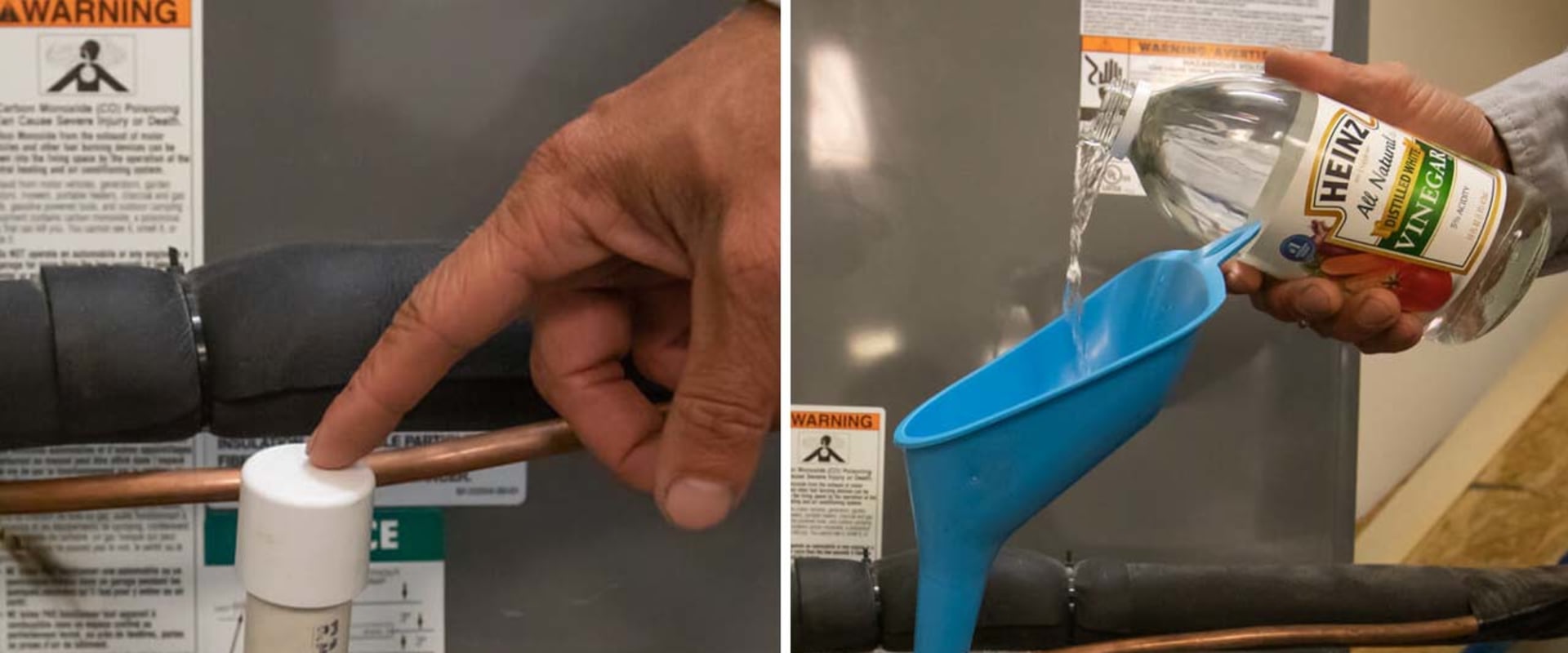
If you’re in Longwood, FL and your AC drain line “mysteriously” clogs every few weeks or months, you’re not imagining things—and you’re not alone. In our day-to-day work across Seminole County, we see the same pattern: Longwood’s humidity keeps condensate flowing almost nonstop, and that steady moisture becomes the perfect incubator for algae and biofilm that slowly narrows the pipe until it plugs. Add a little dust from return leaks or attic air, and the line can turn into a slime trap faster than most homeowners expect.
This page breaks down what’s actually happening inside your drain line (not just the generic “pour bleach in it” advice). You’ll get a clear cause-and-effect diagnosis—from poor slope and sagging PVC to dirty coils, negative pressure issues, and float switch shutdowns—plus a prevention routine we’ve found works best in real Longwood homes. We’ll also cover safe, step-by-step fixes you can try immediately, how to tell when you’re dealing with a simple clog versus a system setup problem, and the exact signs that mean it’s time to bring in a pro before a backup turns into water damage.
TL;DR Quick Answer
Best cadence: Schedule professional AC maintenance 2× per year (spring + fall). Longwood’s humidity and long cooling season make “once a year” easy to outgrow.
Top priorities:
Drain line + pan cleaning (prevents clogs, leaks, float-switch shutdowns)
Airflow + filter discipline (keeps the coil cleaner, protects efficiency)
Coil, blower, and electrical checks (catches wear before breakdowns)
If you want fewer surprise repairs: Pair routine tune-ups with a simple monthly habit—check/replace the filter and confirm the drain outlet is dripping when the AC runs on humid days.
Red flags that mean “don’t wait”: musty odor, water near the air handler, repeated shutoffs, weak airflow, rising bills, or short-cycling.
Smart decision rule: Choose a provider who documents readings (temps, amps, airflow, drain condition), not a quick “spray-and-go” visit.
Top Takeaways
Longwood humidity = frequent clogs. Condensate runs often. Biofilm grows fast.
Repeat clogs usually have a cause. Dirty coil/pan. Dust from leaks. Sagging or poorly sloped line.
Prevention wins. Change filters. Maintain the drain line. Schedule seasonal tune-ups.
Watch the early warnings. Musty odor. Water near the air handler. Weak airflow. Random shutoffs.
In Longwood, FL, a “clogged AC drain line” is rarely random. Your air conditioner pulls moisture out of the air, and that water has to exit through the condensate drain line. In Central Florida’s long cooling season, that line can stay damp for months—creating an ideal environment for algae, biofilm (slimy buildup), and fine debris to collect until the pipe narrows and plugs. When it clogs, the system may leak, trip a float switch, or shut off to prevent water damage.
Why your AC drain line keeps clogging in Longwood
Most repeat clogs come down to one (or more) of these issues:
Biofilm + algae growth: Warm temperatures and constant moisture fuel slime that gradually coats the inside of the pipe.
Dust and debris entering the system: Dirty filters, return leaks, or attic dust can wash into the drain pan and line.
Improper drain line slope or sagging PVC: If the line doesn’t pitch downward consistently, water slows and leaves more residue behind.
Dirty evaporator coil or drain pan: Grime on the coil rinses into the pan, accelerating buildup.
Blocked vent or poor drainage design: Some setups trap water or slow flow, making clogs more likely.
No float switch (or one that trips often): A float switch doesn’t cause clogs, but it’s often the first sign you have a recurring drainage problem.
Common warning signs (before it becomes a mess)
Watch for early indicators so you can act before water spreads:
Musty smell near the air handler or supply vents
Water around the indoor unit, garage closet, or utility area
AC shutting off unexpectedly (often the float switch doing its job)
Gurgling sounds, slow dripping from the drain outlet, or no dripping at all during humid operation
Staining on ceilings/walls near the air handler location
Prevention that actually reduces repeat clogs
If your drain line is clogging more than once a year, think “routine + root cause”:
Change filters on schedule to reduce dust that becomes sludge in the pan and line.
Keep the drain outlet clear (outside or at the termination point) so flow stays steady.
Flush the line periodically using a method recommended by your HVAC manufacturer or a licensed technician (especially in peak summer).
Address airflow or return leaks if you’re seeing excessive dust near the air handler.
Have the coil and drain pan checked during maintenance—many “drain line problems” start at the coil.
A key differentiator: if clogs keep coming back quickly, it’s often not just buildup—it’s drainage geometry (slope/sags) or a dirty coil continuously feeding the line.
Quick fixes you can try (safely)
If you suspect a clog, these steps are commonly used to restore flow without damaging equipment:
Turn the system off to prevent overflow and protect components.
Locate the drain line access point (often near the indoor air handler).
Clear the line using controlled suction at the drain outlet (many homeowners use a wet/dry vacuum at the exterior termination).
Confirm flow returns by checking for steady dripping at the outlet when the AC runs.
Avoid aggressive “chemical dumping” as a default solution—overuse or the wrong product can damage components or create fumes in enclosed spaces. If you’re unsure, it’s safer to have a technician handle cleaning and verify the drain design.
When to call a Longwood HVAC pro
Bring in a professional if any of the following are true:
The line clogs again soon after clearing
You see water damage, ceiling stains, or recurring pan overflow
The system keeps shutting off (float switch trips repeatedly)
You suspect a slope/sag issue, cracked pan, or coil-related sludge
You can’t access the line safely or don’t know where it terminates
A good technician won’t just “clear it and leave”—they’ll check coil condition, pan integrity, line slope, venting, and drainage layout, then recommend a prevention plan tailored to your setup.
Bottom line: In Longwood’s humid climate, drain line clogs are common—but repeat clogs are usually fixable when you combine a reliable cleaning routine with a quick inspection for airflow, coil cleanliness, and proper drain line pitch.

Essential Resources
City of Longwood Permitting & Inspections: Confirm When HVAC Work Needs a Permit
Use this to verify whether your planned HVAC work (especially replacements or major changes) requires permits/inspections and to find the correct City contact path.
URL: https://www.longwoodfl.org/169/Permitting-and-Inspections
Seminole County Building Division: Get the Official Rules That Impact HVAC Projects
A reliable hub for county building oversight, contacts, and guidance—helpful when you want clarity on requirements that can affect timelines and approvals.
URL: https://www.seminolecountyfl.gov/departments-services/development-services/building/
Seminole County Building Permitting: Understand the Process Before You Schedule Work
This resource outlines how permitting typically works so you can avoid delays, missing paperwork, and last-minute reschedules.
URL: https://www.seminolecountyfl.gov/departments-services/development-services/building/building-permitting/
Seminole County Online Permits Portal: Track Status and Inspections Without Phone Tag
Use the portal to check permit activity, monitor progress, and handle inspection steps more efficiently when permits are involved.
URL: https://semc-egov.aspgov.com/Click2GovBP/index.html
Seminole County Forms & Applications: Download the Paperwork HVAC Jobs Often Require
If your project triggers permitting, this page helps you pull the right forms quickly—reducing back-and-forth and preventing stalled approvals.
URL: https://www.seminolecountyfl.gov/departments-services/development-services/building/forms-applications
Florida DBPR License Search: Verify Your HVAC Contractor’s License in Minutes
Before you commit, confirm a contractor’s license status through Florida’s official database—one of the simplest ways to protect your home and budget.
URL: https://www.myfloridalicense.com/wl11.asp
ENERGY STAR HVAC Maintenance Checklist: Use a Credible Baseline for What Maintenance Should Include
A practical checklist you can use to compare “tune-up” claims against recognized best practices—filters, airflow, inspections, and seasonal prep.
URL: https://www.energystar.gov/saveathome/heating-cooling/maintenance-checklist
Supporting Statistics
Indoor air matters more than most people think
We see homeowners focus on “outside air,” but most exposure happens inside the home.
The EPA says Americans spend ~90% of their time indoors.
The EPA also notes some indoor pollutant levels are often 2–5× higher than typical outdoor levels.
Source (EPA): https://www.epa.gov/report-environment/indoor-air-quality
AC is a major driver of your electric bill
In summer call-backs, we often trace high bills to simple efficiency killers (restricted airflow, dirty components).
The EIA reports air conditioning = 19% of residential site electricity use (2020).
Source (EIA): https://www.eia.gov/energyexplained/use-of-energy/electricity-use-in-homes.php
Humidity control is a maintenance priority in Florida
In Longwood’s climate, drain line issues can keep areas damp—exactly what mold needs.
The CDC recommends keeping indoor humidity ≤ 50% to help prevent mold growth.
Source (CDC PDF): https://www.cdc.gov/mold/pdfs/you_can_control_mold.pdf
Duct performance can make or break system efficiency
“Runs forever” complaints often come down to air delivery, not just the equipment.
ENERGY STAR states sealing and insulating ducts can improve heating/cooling efficiency by as much as 20% (and sometimes more).
Source (ENERGY STAR): https://www.energystar.gov/saveathome/heating-cooling
Final Thought & Opinion
In Longwood, FL, AC drain line clogs usually aren’t random. Humidity keeps condensate flowing for long stretches, which helps algae and biofilm build up fast.
Key takeaway: handle the clog and remove the conditions that keep recreating it.
What this page proved
Longwood’s moisture-heavy climate makes clogs more likely.
The fastest “fix” is clearing the blockage safely.
The lasting fix is prevention: cleaner airflow + cleaner coil/pan + proper drainage setup.
Why it matters (backed by the data)
You’re indoors most of the time (EPA), so indoor air + moisture control matters.
AC is a meaningful slice of home electricity use (EIA), so efficiency losses add up.
Humidity should stay ≤ 50% to help prevent mold (CDC).
Duct/airflow improvements can deliver real efficiency gains (ENERGY STAR).
My real-world opinion
A “clogged drain line” is often a symptom, not the root issue.
If clogs keep returning, don’t just flush again—inspect why:
Is the coil/pan feeding sludge into the line?
Is airflow pulling in dust from leaks?
Is the drain line sagging or poorly sloped?
Bottom line: the homes that stop repeat clogs treat condensate drainage like a system—clean source, clear pathway, simple routine. That’s how you get a dry, efficient, predictable cooling season.
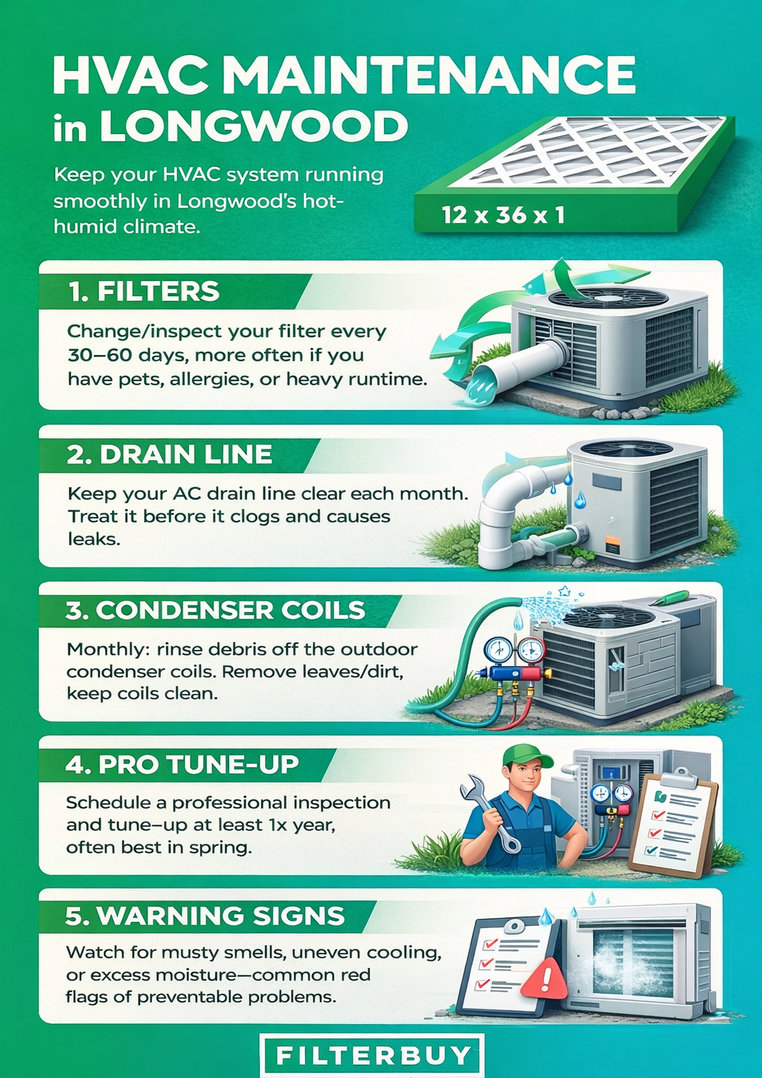
FAQ on “HVAC Maintenance in Longwood”
Q: How often do Longwood homes need HVAC maintenance?
A:
2× per year is ideal (spring + fall).
In our local experience, humidity + long run times make 1× per year easy to outgrow.
Q: What should a “real” tune-up include?
A: Look for measured proof, not a quick glance:
Temp split / performance readings
Electrical checks (amps, capacitors)
Coil + blower inspection (cleaning if needed)
Drain pan + drain line verified clear
Notes/photos of findings
Q: Why do AC drain lines clog so often in Longwood?
A:
Constant moisture fuels biofilm/algae.
Repeat clogs usually point to:
Dirty coil/pan feeding sludge
Dust from return leaks
Sagging/poor slope causing water to sit
Q: Are HVAC maintenance plans worth it here?
A:
Often yes—if the scope is specific.
Best plans include:
Priority scheduling
Drain line + electrical testing included (not add-ons)
Q: What signs mean I should call for service now?
A: Don’t wait if you notice:
Water near the air handler
Musty odor
Random shutoffs (float switch trips)
Weak airflow
Short-cycling
Sudden bill increase
Learn more about HVAC Care from one of our HVAC solutions branches…
Filterbuy HVAC Solutions - Miami FL - Air Conditioning Service
1300 S Miami Ave Apt 4806 Miami FL 33130
(305) 306-5027
Filterbuy HVAC Solutions - Miami FL - Air Conditioning Service